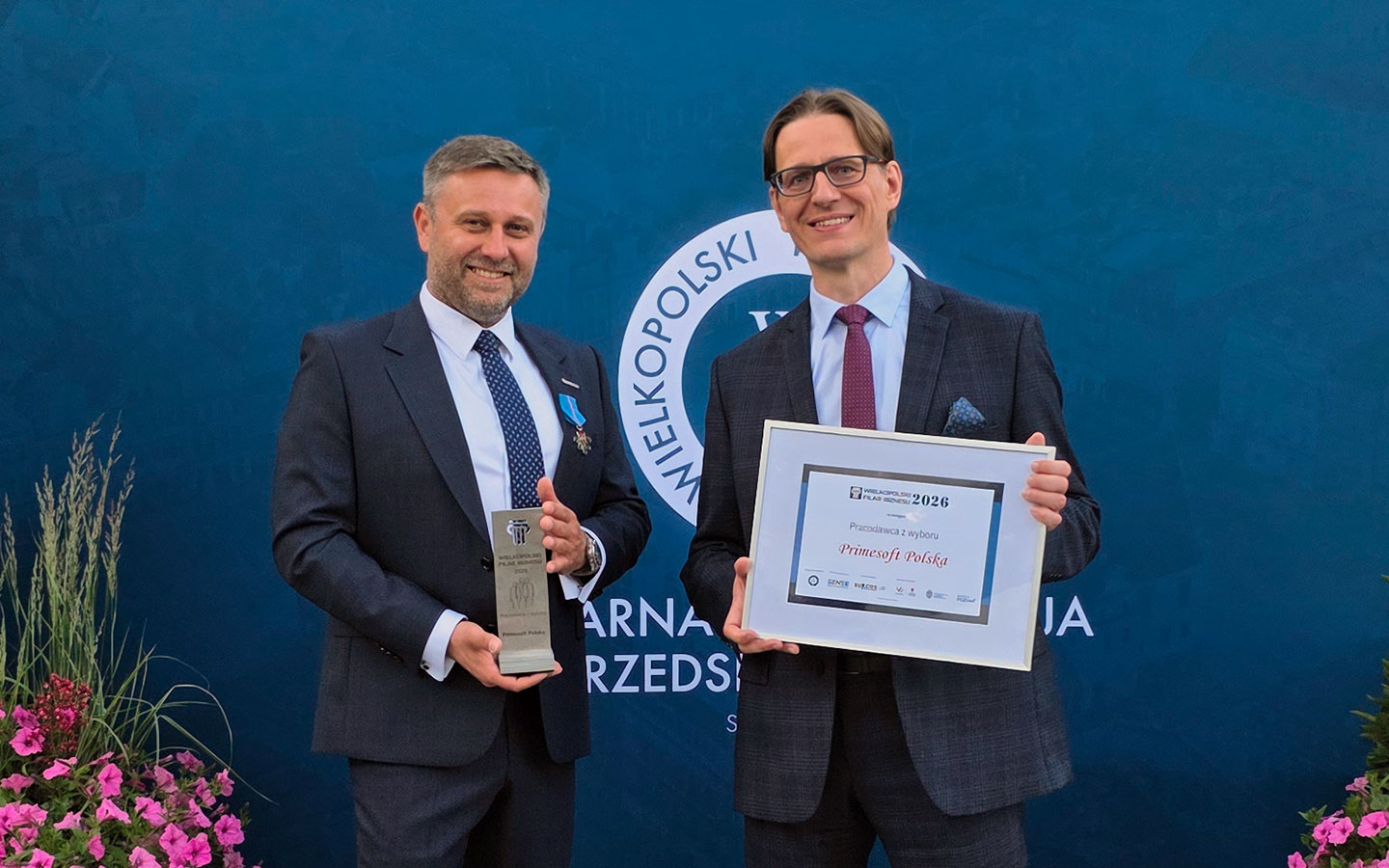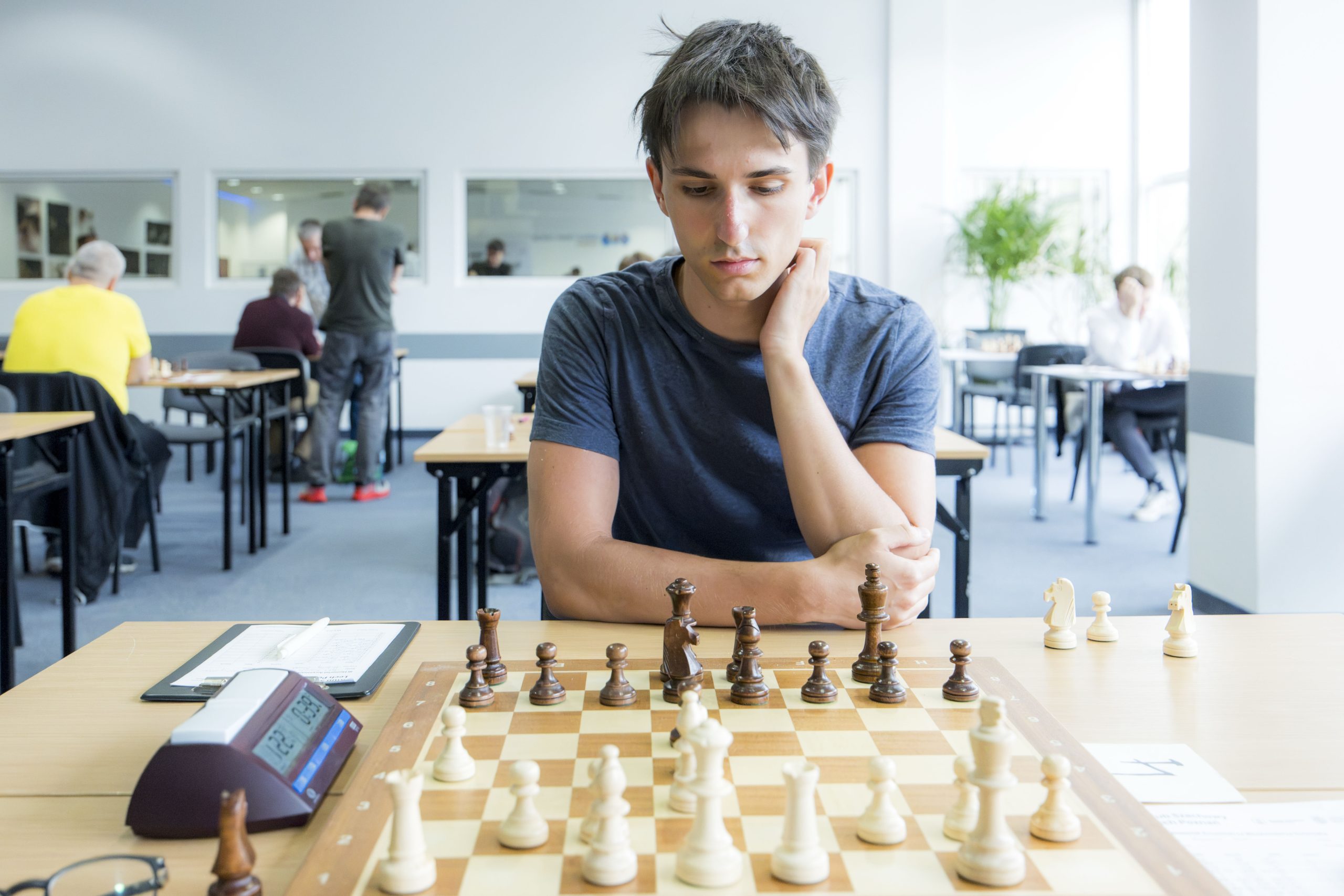
Primesoft Polska was the main sponsor of the Grandmaster Włodzimierz Schmidt Chess Festival. However, the company was present at the event not only as a partner. Mikołaj Nowak, who is a member of the Primesoft Polska team, sat at the chessboard in the 4th International Master Zbigniew Doda Memorial.
The Grandmaster Włodzimierz Schmidt Chess Festival combined sporting competition with the commemoration of two players particularly important to the history of chess in Poznań: Włodzimierz Schmidt and Zbigniew Doda.
Four tournaments were held at the World Trade Center Poznań from July 18 to 28. Grandmasters, experienced players, young talents, and children gaining their first tournament experience met at the chessboards. The event was organized by Klub Szachowy Lech Poznań, while Primesoft Polska served as the festival’s main sponsor.
This time, the company’s involvement also had a very personal dimension. Mikołaj Nowak, a Primesoft Polska employee and a player who has been involved in chess for many years, participated in the 4th International Master Zbigniew Doda Memorial.
From School Chess Classes to Master Level
Mikołaj Nowak’s chess journey began in the first grade of primary school. He signed up for school chess classes at a friend’s encouragement. Initially, he did not take the game particularly seriously. The situation changed when his friend went to a competition and returned with a trophy.
– That really motivated me. I started practicing, eventually beat my friend, and gradually climbed higher – recalls Mikołaj Nowak.
One of his first significant successes was winning the Greater Poland championship in the under-nine age category. Further good results encouraged him to continue working. At the age of 18, he achieved a rating of around 2,400 points, only 100 points short of what is required to become a grandmaster. Coaches, including Klaudiusz Urban, played an important role in his development. However, Mikołaj emphasizes that even the best coach cannot replace independent work.
– No one can simply pour knowledge into your head. You have to analyze and work through everything yourself – he points out.
Chess Requires Choices
After finishing school, Mikołaj decided to focus on his studies and professional development. Regular tournament participation and training then became less of a priority, and his rating dropped to around 2,300 points. However, this does not mean giving up ambitious sporting goals. After completing his studies, he wants to devote more time to chess again.
– I think every ambitious chess player dreams of the grandmaster title. It is a very difficult goal. I have moved somewhat away from my best form, but I want to try to return to it. I am not going to give up – he says. As he notes, chess at a high level is difficult to treat solely as an additional activity. Achieving the best results requires regular training, analyzing games, and frequent trips to tournaments.
A Good Start Is Not Enough
The 4th International Master Zbigniew Doda Memorial was played using the Swiss system. This means that in successive rounds, players faced opponents with similar scores. The tournament featured 29 male and female chess players, each of whom played nine games. The tournament’s patron, Zbigniew Doda, was one of the most outstanding representatives of the KKS Lech Poznań chess section. He won the Polish championship twice and represented the country at Chess Olympiads seven times.
Mikołaj Nowak entered this year’s memorial with the intention of maintaining or improving his rating. The beginning of the competition was promising. After four days, things were looking good, but the second part of the competition proved much more difficult.
– I made several wrong decisions in positions that needed to be assessed very precisely. My opponents did it better. I also had health problems, but I don’t want to use them as an excuse – admits the player, who regularly represents Klub Szachowy Lech Poznań.
One of the turning points was a defeat against his club colleague, Andrij Diaczek. Mikołaj played with the white pieces, which, thanks to the opportunity to make the first move, allow a player to impose their own pace on the opponent. However, his opponent chose an aggressive style of play from the very beginning.
– I knew this game was unlikely to end in a draw. Either I would win or I would lose. My opponent played very well, and my defeat was fully deserved – he assesses.
Ultimately, the memorial was won by Marcin Sieciechowicz, also from Klub Szachowy Lech Poznań. He scored 6.5 points, finishing ahead of Andrij Smeryk thanks to a victory in their head-to-head game.
Conditions That Allow Players to Focus on the Game
Mikołaj Nowak rated the organization of the tournament at the World Trade Center Poznań very highly. The air-conditioned room, quiet environment, and appropriate facilities provided participants with conditions that allowed them to concentrate on the competition.
This is particularly important in a discipline where a single game can last four or five hours. Some festival participants decided to compete in two groups simultaneously, spending up to eight hours a day at the chessboard.
– From the outside, chess may not seem particularly demanding, but eight hours of playing means eight hours of intensive mental work. There is also stress, because one bad move can determine everything – explains Mikołaj.
Chess Skills Are Also Useful at Work
Mikołaj Nowak also uses the experience gained during many years of competition outside tournaments. Chess develops logical thinking, the ability to recognize patterns, and plan subsequent actions. It also teaches how to respond to unexpected situations. Even the best-prepared strategy may need to change when an opponent makes a move that the player had not previously considered.
– You have to adapt your strategy to the new situation. Chess develops resilience to stress, planning, and preparation for the unexpected – says Mikołaj. These skills are also useful in business and technology projects. Analyzing many possible scenarios, anticipating the consequences of decisions, and being ready to change initial assumptions are part of both tournament competition and everyday teamwork.